
The Weight We Won’t Set Down
Did you know that researchers at Johns Hopkins — and a stack of other studies right along with them — have found that chronic, unresolved bitterness is linked to higher rates of heart disease, high blood pressure, even a weakened immune system? Unforgiveness doesn’t just mess with your soul. It messes with your blood pressure. It messes with your sleep. It messes with your body. We like to think bitterness is this quiet little thing we carry around in our head, but medical science is telling us — no, it’s carried in your chest, in your arteries, in your gut.
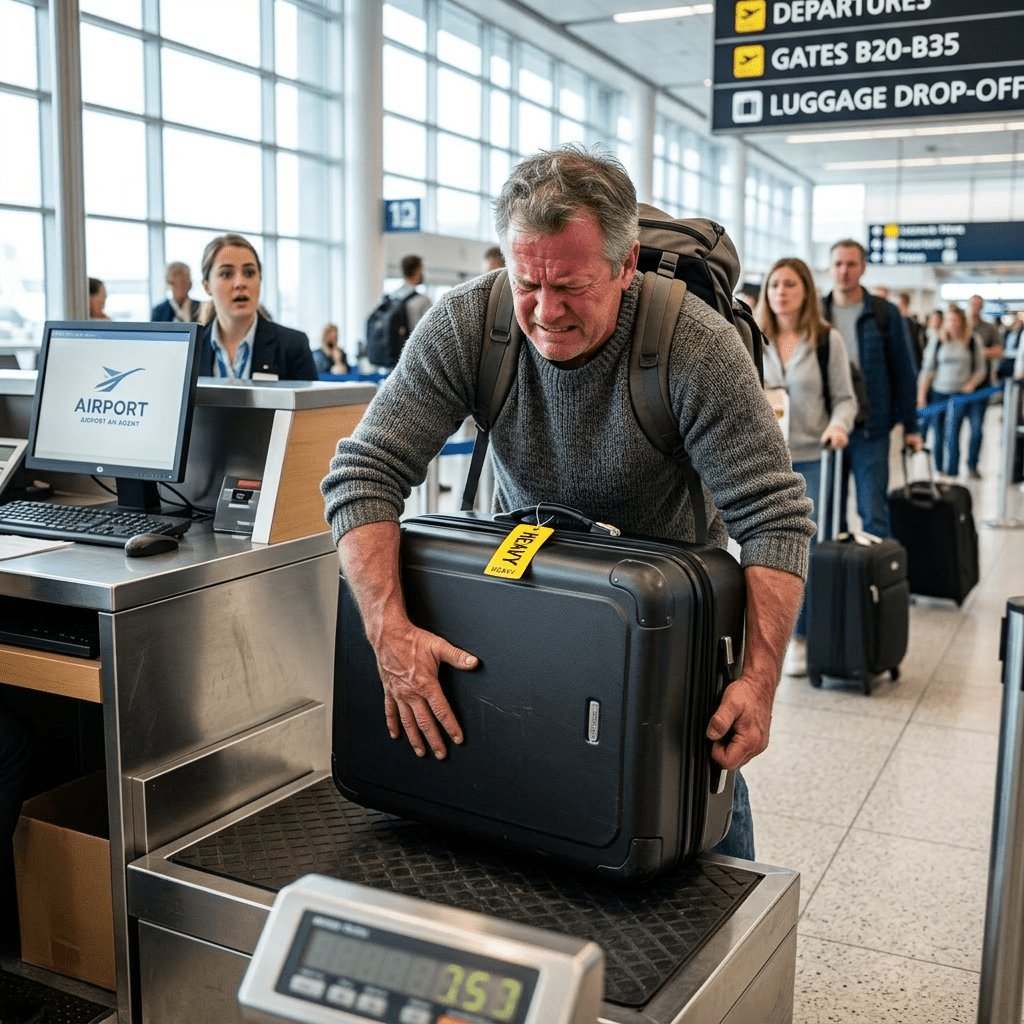
So here’s the picture I want you to hold onto today. You ever watch somebody at the airport who refuses to check their bag? I mean refuses. They’ve got this suitcase — probably weighs about forty pounds — and they are hauling it up escalators, wedging it into bathroom stalls, wrestling it into the overhead bin while six people behind them sigh audibly. And you want to lean over and say, “Sir. Ma’am. There is a counter. They will check that for you. You do not have to carry this.”
But they won’t let it go. Maybe they don’t trust anybody else with it. Maybe they’ve just gotten used to carrying it. Maybe it’s been so long since they set it down that they’ve forgotten what their hands feel like empty.
That’s a lot of us. Except the suitcase isn’t luggage — it’s what somebody said to you in 1997. It’s what your dad didn’t say at all. It’s the divorce, the betrayal, the friend who used you and walked away, the parent who never once told you they were proud. And we drag that thing through every relationship we have. We drag it into our marriages. We drag it into church on Sunday morning with a smile plastered on and nobody’s the wiser. We drag it into how we raise our kids, how we trust — or don’t trust — the next person who tries to get close.
And here’s the kicker: dragging it doesn’t protect us. It’s not making us stronger. It is wearing us out, and — as it turns out — it’s making us sick.
So the question isn’t “can I forget it happened?”
The suitcase is real. The hurt is real. The question is: are you going to keep hauling this thing through every terminal of your life, or is there a counter where you can actually check it?
There’s a man in the New Testament who had every reason to keep dragging his bags. Let’s go look at him.
Forgetting What Lies Behind
In Philippians 3:13-14, the apostle Paul writes:
“Brethren, I do not regard myself as having laid hold of it yet; but one thing I do: forgetting what lies behind and reaching forward to what lies ahead, I press on toward the goal for the prize of the upward call of God in Christ Jesus.” (NASB)
Now, before I go any further, we need to remember who’s writing this. This is not some guy who had a mildly rough childhood. This is Saul of Tarsus. This is the man who held the coats while they stoned Stephen to death. This is the man who, by his own admission back in verse 6, was “a persecutor of the church.” He didn’t just disagree with Christians — he hunted them. He had letters of authority to drag men and women out of their houses and throw them in prison. Some of them died because of him.
If anybody had a suitcase worth carrying, it was Paul. Guilt over what he’d done. Shame over who he’d been. And on the flip side — if anybody had a right to carry around a bag full of what had been done TO him — the beatings, the shipwrecks, the stoning in Lystra where they left him for dead outside the city, the betrayal by companions — it was Paul.
But look at verse 13 again. “One thing I do: forgetting what lies behind.”
Now let’s be careful here, because “forgetting” in the Greek doesn’t mean amnesia. Paul is not saying he woke up one morning and the memories were wiped clean, like some kind of first-century Men in Black flashy-thing moment. That’s not what this word means. It means to no longer be influenced by, to no longer let something have a claim on you. It’s a releasing word, not an erasing word.
Paul remembered exactly what he’d done. He talks about it in multiple letters. He never forgot Stephen’s face, I’d bet you money on that. What he refused to do was let that past — whether his own sin or somebody else’s sin against him — set up permanent residence in the driver’s seat of his life.
Did you catch the posture in this verse? “Forgetting what lies behind and reaching forward to what lies ahead.” You cannot reach forward with both hands full of yesterday. Try it. Physically try to reach for something in front of you while your arms are wrapped around a suitcase. You can’t do it. The grip that holds onto the hurt is the same grip that can’t take hold of what God has for you next.
So here’s point two, plain and simple: your hurt does not disqualify you from your future — but your grip on it will paralyze you in your present.
Maybe you’re sitting here thinking, “Steve, you don’t know what they did to me.” You’re right, I don’t. But Paul does. And Paul says the answer was never to pretend it didn’t happen. The answer was to stop letting it define where he was headed.
Set the Suitcase Down
So what do we do with this? Because I don’t want to leave you with a nice word picture and a Greek word study and have you still dragging the same bag you. Let’s get concrete.
Here’s what I want you to do — maybe not tonight when you’re exhausted, but sometime this week, when you’ve got a quiet ten minutes. Get a piece of paper. Write down one hurt. Just one. You may have a whole baggage claim full of them, but start with one. Write down what happened. Write down who it was. Be specific — vague prayers produce vague healing.
And then — and I want you to actually do this, not just think about doing this — tear that paper up. Or better yet, take it outside and burn it. Let it be a physical act, not just a mental one, because we are embodied people and sometimes our bodies need to participate in what our hearts are trying to believe. As you tear it, or as you watch it burn, say out loud: “God, I am checking this at the counter. I am done carrying it through every terminal of my life. It’s Yours now.”
That’s it. That’s the whole application. It’s not complicated. It’s just costly — because your hands have gotten used to that handle.
Now some of you are going to do this and feel absolutely nothing, and that’s okay. Feelings follow obedience; they don’t always lead it. Some of you are going to do this and weep like you haven’t wept in years. Either way — the suitcase is still checked. You don’t have to feel different for it to be true.
I will end with this. You can keep dragging that bag through every relationship you have — through your marriage, through your friendships, through the way you look at your own kids — or you can check it at the counter today.
What’s it going to be?
Set it down. Walk to your gate with empty hands. Because a suitcase you refuse to check was never going to make the flight worth it anyway.


 The Watchman